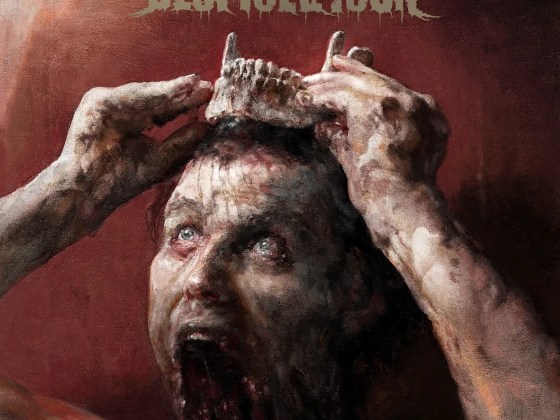

Volumes reminds me of the good ol’ days when life and the internet was a simpler and happier place. I bought into the entire “SumerianCore” phase of early djenty-metalcore, and Volumes (along with Structures) was among the first bands that truly scratched that itch in years now dissolved in nostalgia. I dug the heck out of The Concept of Dreaming EP and Via, and these records became the standard against which future genre bands would be measured.
Sadly, life moved on, the grays began to pile on, the internet became an ugly place, and Volumes largely disappeared from popular conversation. I gave No Sleep a fair shake and found it enjoyable, but it clashed with my more extreme tastes. By the time Happier? hit the airwaves, I was prepared to let Volumes be added to the “nostalgic but not for me anymore” list. In an effort to revitalize my own yearning for simpler times, I decided to give their latest work, Mirror Touch, a deep dive. So here goes!
At the time of this review, a few singles for Mirror Touch have been put out, and they are pretty darn good! The first single, “Sidewinder” is an aggressive beater, and immediately Mirror Touch looks promising. Any doubts that Volumes has gotten soft over time should be laid to rest by “Sidewinder”. While “SOAP” shows some variation and a throwback to older Volumes records, it’s “Bad Habit” that will ultimately be the standout single/track of Mirror Touch. Adding elements that have become commonplace to the modern metalcore sound to the trademark Volumes chugs, with the second-wave clean hooks, makes “Bad Habit” an instant earworm.
More drawn to the more violent side of the Volumes sound, “Bottom Dollar” and “Suffer On” had me caught in “stank face mode”, with aggressive barks reminiscent of modern Wage War and Fit For A King. In contrast, I found myself equally caught with the more “chill” tracks, “California” and “Dream” that brought back fond memories of “On Her Mind”. This “fun poolside” aspect of Volumes, carried by the sheer power of “vibes” (as the kids say) touches a corner in my grumpy old man mind that few other bands can access lately, solidifying that throwback to the aforementioned “good ol times”.
Overall, Mirror Touch feels like a return to form for a Volumes record. Unfortunately, there is a lack of “depth” to their songwriting, relying on “vibes” far too often, with an over-reliance on added studio accoutrements rather than solid guitar-centred musicianship. While these tricks felt novel a decade ago, they hold Volumes back from pushing their way past other bands who are trying their hardest to stand out in an ever-crowding space. Looking at the personnel for Mirror Touch, the lack of a full-time guitarist is concerning. With the sad passing of Diego Farias, much of that Volumes guitar magic was lost, and has failed to be re-captured. While studio aficionado and longtime bolster to the scene, Daniel Braunstein handles the guitar duties on this record, Mirror Touch definitely feels like a “studio creation” rather than organic band songwriting. Bassist Raad Soudani remains the sole founding member who has held true through all the eras. His presence is immediately felt, as the bass smacks you in the face throughout the record in the most rewarding way. Longtime vocalist Michael Barr adds the harsh vocals to the record, throwing back to earlier eras, while Myke Terry provides his signature “chill poolside croons”.
Mirror Touch is a solid Volumes record. It is an enjoyable progressive metalcore record and a great throwback to fonder times in the scene. However, only time will tell how deeply this record will permeate into modern audiences and beat out hypercompetent competitors in an ever-crowding space.
-
Overall Sound8/10 Very Good"Mirror Touch" is a solid Volumes record. It is an enjoyable progressive metalcore record and a great throwback to fonder times in the scene.
-
Songwriting & Lyrics7/10 GoodUnfortunately, there is a lack of “depth” to their songwriting, relying on “vibes” far too often, with an over-reliance on added studio accoutrements rather than solid guitar-centred musicianship.